Bahasa Indonesia
 English
Ensuring Sustainable Palm Oil: Challenges in Indonesia & Malaysia
Asia Palm Oil Magazine Live Interview Session
Ensuring Sustainable Palm Oil: Challenges in Indonesia & Malaysia
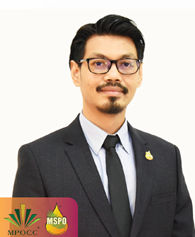
Mohammad Hafezh Abdul Rahman
Chief Executive Officer (CEO) of Malaysian Palm Oil Certification Council (MPOCC), Malaysia
Mohammad Hafezh Abdul Rahman, no stranger to the palm oil industry. He looks forward to getting the Malaysian Sustainable Palm Oil (MSPO) certification scheme to be globally accepted as a valid economic tool in ensuring that it is responsibly and sustainably produced. He was appointed as the Chief Executive Officer (CEO) of the Malaysian Palm Oil Certification Council on 15 February 2021. He holds a master’s degree in Business Administration from Multimedia University (MMU) and a Bachelor of Science in Information Technology from the National University of Malaysia (UKM).
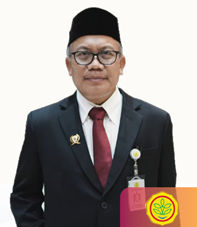
Dr. Kasdi Subagyono
Chairman of ISPO Secretariat, Secretary General at the Ministry of Agriculture (MoA), Indonesia
Prior to his current assignment, he has held strategic positions at the MoA as Director General of Estate Crops, Director of Planning Bureau, Executive Secretary of Indonesian Agency for Agricultural Research and Development, and Director of Indonesian Agroclimate and Hydrology Research Institute. He received his Ph.D in Geoscience from Tsukuba University in Japan, in 2003, and completed his Master degree in Soil Science at Gent Universiteit, Belgium. His area of expertise includes agriculture policy and planning, hydrology, soil conservation, and climate change.
Local community involvement is the key to success in ensuring sustainability in palm oil. What are some of the challenges faced by Malaysian Sustainable Palm Oil (MSPO) and Indonesian Sustainable Palm Oil (ISPO) in addressing the importance of sustainability to society?
Mr. Hafezh:
There are challenges that we need to address with regards to addressing the sustainability concept to the society. The first thing is a mindset change. One thing we have to remember is that oil palm is being planted by farmers or the local communities to get a decent income for the families. For generations, they have been planting in a certain way, normally maximising profit by cutting operating costs which often leads to unsustainable practices. The same problem escalates as we go further down the supply chain. Naturally, there will be resistance when we want to introduce something new. Moreover, it requires extra efforts that could potentially diminish their existing income – especially among the smallholders.
The MSPO scheme will eliminate all these problems by promoting sustainable practices which include best practices along the supply chain for common benefits. We want everybody involved in the industry, including the natural resources are in perfect balance.
Dr. Kasdi: First of all, there are 16.4 million hectares of palm oil area in Indonesia and 45% is from the smallholder. This is very strategic to have standardization and also certification for palm oil. We have the opportunity for the smallholder to have certification because the government supports the budget for the financing in five years. The farmer is allowed to accomplish the whole prerequisite of the Indonesian Sustainable Palm Oil (ISPO) in five years. Secondly, the government pays for the certification so it’s free for smallholders to get a certification. Therefore, the regulation is for the farmers to have a free certificate. This is good news because Indonesia is now number one in the world for palm oil production. If there are a lot more people signing up for certification it means our grades standard is higher now.
Palm oil ban can be very damaging such as it will affect the livelihood of the smallholders. Could you elaborate on some of the steps that (MSPO) has taken to encourage the smallholders to opt for sustainability certifications?
Mr. Hafezh:
The palm oil ban will affect everyone in the industry especially smallholders, which is why the inclusion of smallholders in the sustainable palm oil supply chain has always been the priority for MSPO.
The government offers total support to the smallholders due to their lack of technical and financial resources. To begin with, the government provides financial support for smallholders to be certified through Dana Insentif Pekebun Kecil.
For technical support, the Malaysian Palm Oil Board (MPOB) provides around 500 Tunjuk Ajar Nasihat Sawit (TUNAS) officers all around the country that are tasked to take care of all the oil palm planters in their respective areas. These officers’ main tasks are to help smallholders in areas such as licensing, replanting, and auditing. MPOB also provides and establishes Sustainable Palm Oil Clusters (SPOC) to help the smallholders to be MSPO certified by preparing them for audits and arranging audits with the certification bodies.
In its early adoption, there was a lack of awareness about MSPO among the smallholders. Therefore, we engage them through various collaborative programs between MPOCC, MPOB, and the ministry. There were media programs and roadshows in the cities and rural areas where we inform the society on the importance of environmental sustainability and to adopt MSPO if they are planting oil palm. The idea is to get the smallholders to grasp the idea of sustainability in palm oil production. Once this is ingrained in their practice, then they will have better access to the global market.
Smallholders always felt that it's costly to be certified, how can ISPO help them mitigate these costs?
Dr. Kasdi: As an indicator for the sustainable development goals, from the 17 we already cover 12 and we still completed that in terms of the process of certification. For the next three or five years, we are still focusing on how to do refunding of the process and procedure of the ISPO. This is to have more opportunities for the smallholder to have access to the certification. We also have a few comparisons with MSPO. The process that we are still concerned with is that the strength of the management of ISPO itself. This is as we have to increase the capacity of the human resource. More facilitation of the smallholders and for the local alternative to make it easier to proceed to ISPO. Overall, we still complete the indicator parameter itself to have the sustainable development goals. RSPO has to take part since giants like Malaysia and Indonesia respectively confirming to the local regulation such as refunding the ISPO itself especially for the system and human resources.
What role would RSPO have to play since giants like Malaysia and Indonesia have MSPO and ISPO respectively conforming to local regulations? How do we differentiate MSPO and ISPO from RSPO?
Mr. Hafezh:
I think RSPO will continue to play its role as the industry’s voluntary scheme. They are a group of big corporations that agree to comply with a certain sustainability requirement and to trade among its members.
Compared to MSPO and ISPO, we are a national scheme where we adopt all sustainability requirements and translate them to suit the local law and practices. We cover a holistic scope by ensuring all that are involved in the palm oil industry will adhere to the global sustainability demand and be rewarded with fair market access. This is done in accordance with the national laws, constitutions, and other complex issues such as resource management.
MSPO also addresses this as a national initiative which is very different from a corporation focus initiative. As compared to other voluntary schemes, our commitment to sustainability is by the country itself. Malaysia has always supported sustainability efforts since the Rio Summit 1992 where we pledged to keep more than half of our lands forest covered. We also want to make sure that palm oil is sustainable not just for profit or to satisfy specific consumer demand but more importantly is to ensure the sustainability efforts that are being taken by us are for the future generation.
This is a national commitment as we are putting Malaysia's name to it, so definitely our certification would cater not only to the profit side but the benefits of people who are involved in it. We also want to show a good relationship with our trading nations, and I believe this is what embodies a national certification. I hope to see more trading nations adopting national schemes like MSPO.
Dr. Kasdi: With the Indonesian government's push to make the farmer a major part of the biofuel mix doesn't mean getting a certification will be easier to cope with the demand. The policy is to have a link to the market with the high price they can get it from the palm oil production. The certification is important that we have to continue. We have also more socialization for the farmer and access to the ISPO process. We also have an increased capacity of ISPO. With the pandemic occurring now, it doesn't mean more companies are now focusing on production instead of getting certification as especially smallholders are surviving. It seems to be more crucial. We still proceed with the certification itself and focus on the production because the farmer in the villages is still working normally in the field especially in the palm oil plantation. The best commodity of agriculture should support the economy of Indonesia.